

Camels have been helping people travel through the desert for millennia, and alpacas and llamas have long been raised for their silky fur.
Yi Shi, University of Pittsburgh assistant professor of cell biology, and his lab colleagues are among a group of scientists who see something potentially much more valuable in these unique creatures of the camelid family, including possibly effective treatment for SARS CoV-2.
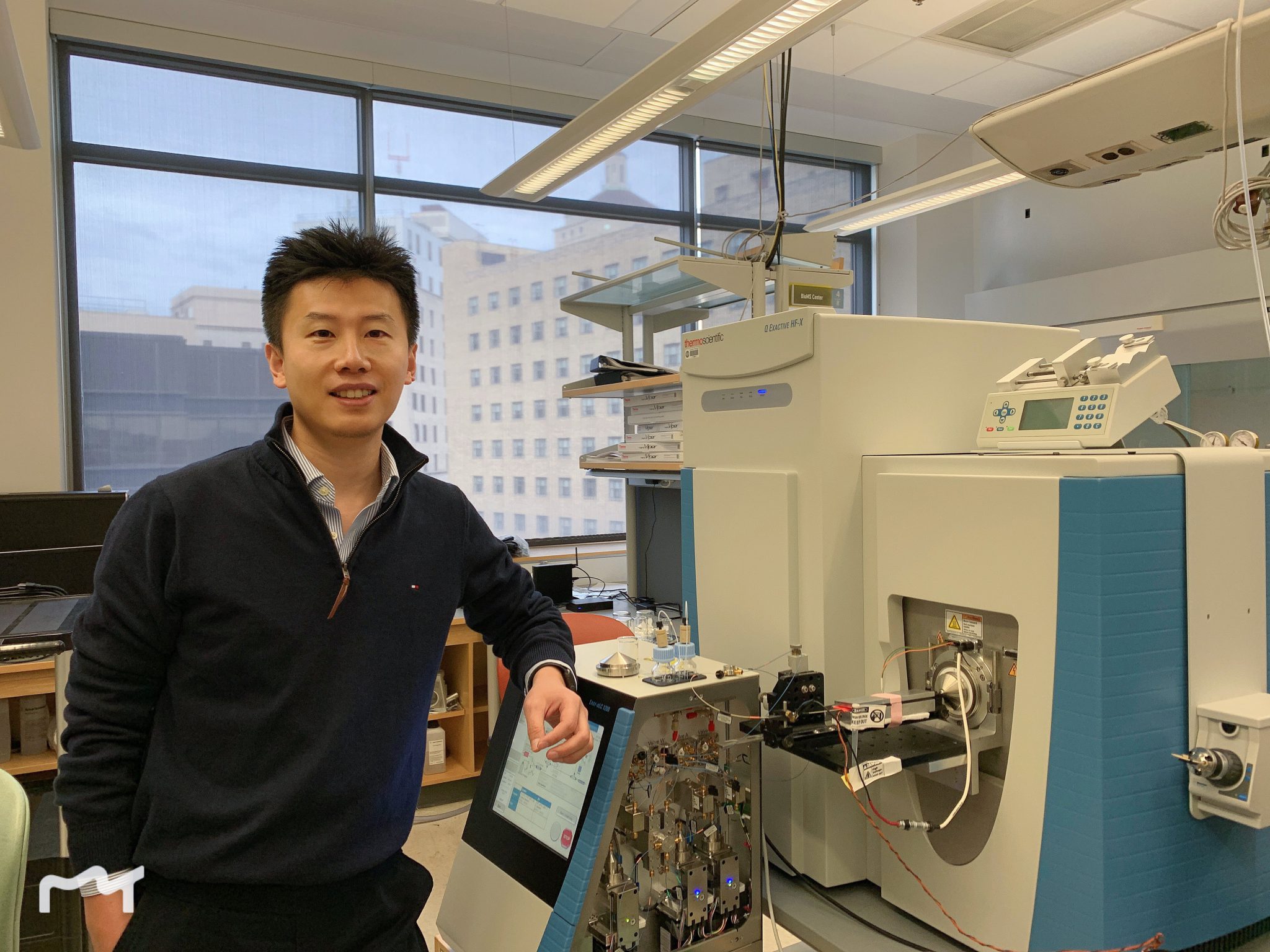
Shi came to Pitt more than three years ago to start a lab focused on what he calls “disruptive proteomics technologies” for the discovery and development of new disease therapies. The proteins he is most interested in are nanobodies, which are a slimmed-down version of human antibodies that have several advantages as potential therapies: they are soluble, and much more stable compared to human antibodies. Camelid creatures are the only mammals known to produce these nanobodies.
“Human antibodies are difficult to subject to bioengineering. They are too big,” Shi said. “Nanobodies, as their name suggests, are tiny.”
Nanobodies can be cultured easily from microbes such as E-coli bacteria, which makes them magnitudes cheaper to produce. Another advantage is that unlike human antibodies, which must be injected, nanobodies are more flexible for drug administration and could potentially be inhaled right into the lungs where they are needed to counteract the virus.
Shi said that existing human antibody approaches to treating COVID-19, such as the ones in late stage clinical trials from the companies Regeneron and Eli Lilly, are very expensive to manufacture. In addition, there is a potential risk of Antibody-Dependent Enhancement (ADE) that could actually cause more harm to the patients. In this situation, the binding of a virus to a suboptimal antibody can actually enhance instead of preventing the virus’ entrance into host cells, followed by its replication and the death of immune cells. This phenomenon has been noted with the viruses that cause dengue fever, yellow fever, and coronaviruses
Shi is collaborating with Pitt’s Center for Vaccine Research, which is overseeing the development of a potential SARS Cov-2 vaccine on developing preclinical animal tests on the nanobodies for treating and preventing COVID-19.
“Neutralization of coronavirus by antibodies lies at the heart of both the body’s response to COVID-19 and our vaccine development pipeline,” said Paul Duprex, Ph.D., director of the Pitt Center for Vaccine Research. “As a virologist, it is incredible to see how harnessing the quirkiness of llama antibody generation can be translated into the creation of a potent nanoweapon against clinical isolates of SARS-CoV-2.”