

For the past year, a group of 10 Pitt faculty comprised of women and other historically excluded people have explored the realm of academic innovation and entrepreneurship through the University of Pittsburgh Equitable, Inclusive, Innovation and Incubation program, or Pitt EI3 .
Four of the inaugural Pitt EI3 Fellows recently joined the program’s director, Cecelia Yates, associate professor at the School of Nursing, to deliver the keynote address at the Annual Biomedical Research Conference for Minoritized Scientists (ABRCMS), held this year for the first time in Pittsburgh. ABRCMS is the central platform for talented scientists from underrepresented groups to showcase their skills, forge valuable connections, and gain exposure to leading figures in the field.
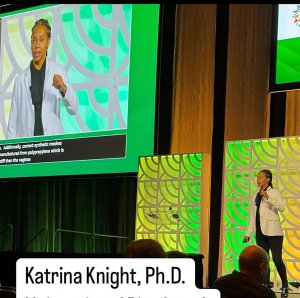


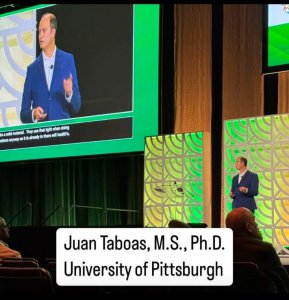
The session’s goal was to demonstrate how Pitt EI3 inspires, educates, and empowers students and faculty researchers to become innovators who push boundaries. Statistics show that women and minorities are significantly underrepresented as inventors, patent grantees, startup founders, and venture capital investors. The Pitt panel illustrated the need to cultivate talent, drive change, and be inspired and energized to develop an entrepreneurial mindset.
Yates opened the session with a powerful reminder of the social imbalances in the nation’s history in innovation, pointing out that black and other minority Americans were issued 50,000 patents from the late 19th into the early 20th centuries, but those innovators have largely gone unheralded.
“Imagine learning about Thomas Edison alongside Granville Woods, who invented a telephone transmitter and the multiplex telegraph. Or learning about C.R. Patterson when studying Henry Ford, who found new ways to mass-produce cars,” she added.
The EI3 program aims to expand the university’s innovation ecosystem by instilling an innovation mindset in female and other historically excluded faculty.
“A mindset can be developed, but it often isn’t. This lack of development is usually due to a lack of understanding or confidence, especially when facing adversity. We learn many things in school, but our education has key gaps,” Yates said.
Following Yates’ introductory remarks, the Pitt EI three fellows gave authentic and inspiring examples of the future of inclusive innovation by dismantling stereotypes and breaking barriers through audacious innovation. Throughout 2024 they have received one-on-one mentoring and coaching and have learned from each other as they have mapped out their own innovation plans to bring their innovations in the classroom and lab to the market. They include:
- James Huguley, associate professor in the School of Social Work and is the chair of the Race and Youth Development Research Group at the Center on Race and Social Problems. His research focuses on school and family-based interventions that promote positive developmental outcomes for black youth in adverse and oppressive contexts, and he is the creator of Parenting While Black: Growing and Healing Together, which provides best practices in racially edifying parenting strategies for black caregivers.
- Charles Jonassaint, associate professor in the School of Medicine, where he is exploring novel technologies to expand the reach and impact of healthcare. He is the primary inventor of Painimation, a human-centered, technology-based approach for measuring pain.
- Katrina Knight is an assistant professor in the Department of Bioengineering. Her research aims to improve the lives of women with pelvic floor disorders through the development of novel and innovative treatments while also increasing the number of minorities pursuing an education and career in science, technology, engineering, and mathematics (STEM).
- Juan Taboas, associate professor in the Department of Oral and Craniofacial Sciences. His lab is working to commercialize a regenerative endodontic therapy for children, who he believes are an underserved population due to the often-higher regulatory burden for therapies targeted to children.
Pitt has strongly contributed to ABRCMS, which drew 6,000 participants nationwide. Past keynote addresses from the university included Sandra Murray, Ph.D., president-elect of the American Society for Cell Biology, Senior Vice Chancellor for Health Sciences, Anantha Shekhar, and Jeremy Berg, Associate Senior Vice Chancellor for Science Strategy and Planning , Health Sciences. They join such prestigious company as former keynote speakers, Drs. Mae Jemison, Neil DeGrasse Tyson, Francis Collins, and the late Maya Angelou.